
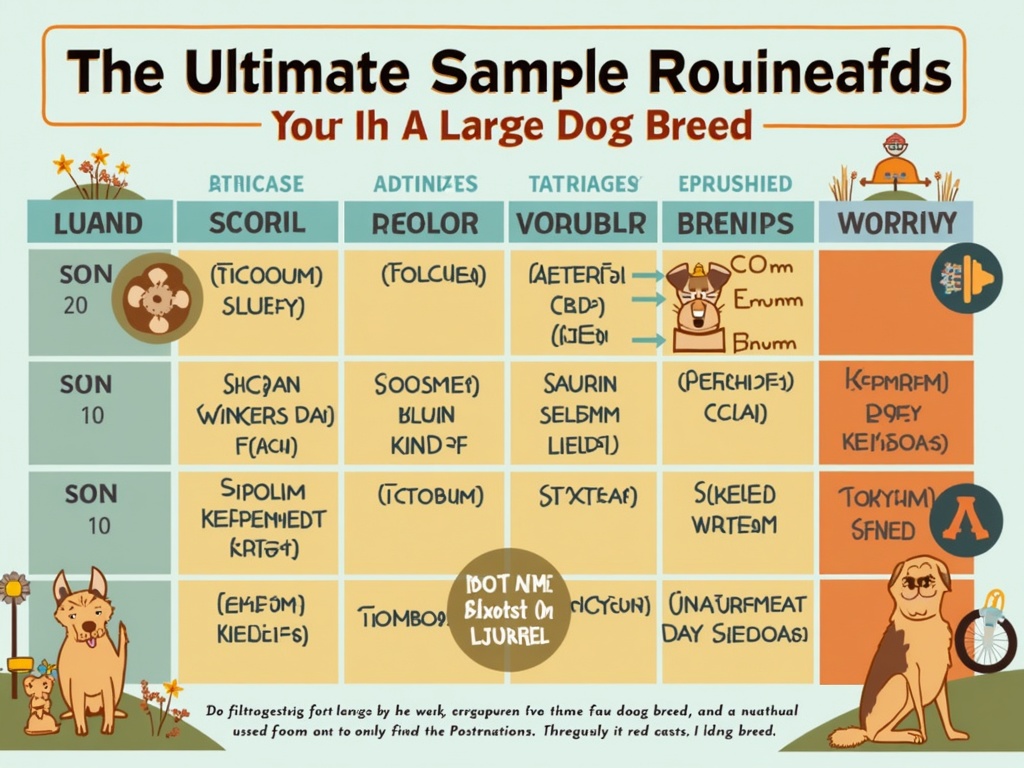
The Ultimate Sample Schedule for a Thriving Large Dog Breed
Imagine a day filled with tail wags, happy sighs, and a well-behaved gentle giant by your side. This isn't just a dream; it's achievable with a structured daily routine tailored to the specific needs of large dog breeds. These magnificent companions, from the stately Great Dane to the loyal Labrador Retriever, thrive on predictability, exercise, and mental stimulation. Let's unlock the secrets to creating a sample schedule that transforms your large dog's life – and yours!
Understanding the Unique Needs of Large Dog Breeds
Before diving into a sample schedule, it's crucial to understand what makes large breeds different. Their size dictates different requirements:
**Growth and Development:Large breed puppies grow rapidly, making them susceptible to bone and joint problems if not fed appropriately.
**Exercise Needs:While some may assume all large dogs need endless running, the intensity and type of exercise are key. Too much high-impact activity can damage developing joints.
**Mental Stimulation:Boredom in large dogs can lead to destructive behaviors. Mental enrichment is just as important as physical exercise.
**Dietary Requirements:Large breeds need specifically formulated dog food to support their growth and prevent obesity, a common concern.
**Health Considerations:Conditions like hip dysplasia, bloat, and arthritis are more prevalent in larger breeds, requiring preventative care and monitoring.
A Sample Daily Schedule: Tailored for Large Breed Success
This is a flexible framework; adjust it based on your dog's age, energy level, and specific breed characteristics.
6:00 – 7:00 AM: Morning Wake-Up and Potty Break
**Gentle Awakening:Avoid startling your dog. A calm greeting is best.
**Immediate Potty Break:Take your dog outside to eliminate first thing. Praise and reward positive behavior.
**Light Stretching:Encourage gentle stretching to warm up muscles.
7:00 – 8:00 AM: Breakfast and Basic Training
**Measured Meal:Provide a pre-portioned breakfast of high-quality dog food formulated for large breeds. Consider a slow-feeder bowl to prevent bloat.
**Training Session (10-15 minutes):Reinforce basic commands like sit, stay, come, and down. Use positive reinforcement techniques. This is a great opportunity to work on recall; essential for off-leash safety in designated areas.
**Puzzle Toy:Offer a puzzle toy filled with kibble to provide mental stimulation after breakfast.
8:00 – 12:00 PM: Mid-Morning Activity and Rest
**Leisurely Walk (30-45 minutes):A moderate-paced walk allows your dog to explore, sniff, and socialize (if appropriate and well-managed). Vary the route to keep things interesting.
**Socialization Opportunities:If your dog is well-socialized, consider a supervised playdate with a compatible dog friend.
**Rest and Relaxation:Provide a comfortable and quiet space for your dog to relax and nap.
12:00 – 1:00 PM: Lunch and Quiet Time
**Light Lunch (Optional):Some owners prefer to split their dog's daily food allowance into smaller meals.
**Chew Toy Session:Offer a durable chew toy to help satisfy your dog's natural chewing instincts and keep them occupied.
**Quiet Time:Encourage your dog to rest or engage in independent play.
1:00 – 5:00 PM: Afternoon Adventure and Mental Enrichment
**Enrichment Activity (30-60 minutes):Engage your dog in a mentally stimulating activity, such as:
**Scent Work:Hide treats or toys and encourage your dog to find them.
**Agility Training (Low Impact):Set up a simple agility course with low jumps and tunnels.
**Flirt Pole:Engage your dog in a chase game with a flirt pole (ensure safe and controlled play).
**Another Potty Break:Before heading inside, make sure your dog has another opportunity to relieve themself.
**Relaxation and Downtime:Provide opportunities for rest and relaxation.
5:00 – 6:00 PM: Dinner and Evening Routine
**Dinner Time:Provide the second portion of your dog's daily food allowance.
**Grooming Session (5-10 minutes):Brush your dog's coat to remove loose hair and prevent mats. This is also a good time to check for ticks or other skin issues.
**Calming Activities:Engage in calming activities, such as gentle massage or quiet cuddling.
6:00 – 9:00 PM: Evening Potty Break and Relaxation
**Evening Walk (20-30 minutes):A shorter, more relaxed walk to allow your dog to relieve themselves and unwind before bedtime.
**Interactive Play:Engage in some light interactive play, such as fetch or tug-of-war (avoid overly stimulating games close to bedtime).
**Final Potty Break:One last potty break before bed.
9:00 – 10:00 PM: Bedtime Routine
**Prepare for Sleep:Provide a comfortable and quiet sleeping space for your dog.
**Bedtime Treat (Optional):A small, healthy treat can help your dog settle down for the night.
**Lights Out:Maintain a consistent bedtime routine to help regulate your dog's sleep cycle.
Adapting the Schedule to Your Dog's Specific Needs
Remember, this is just a sample schedule. You'll need to adjust it based on your dog's individual needs and preferences.
**Age:Puppies need more frequent potty breaks and shorter, more frequent play sessions. Senior dogs may need shorter walks and more rest.
**Breed:Some breeds are naturally more energetic than others. Adjust the exercise levels accordingly.
**Health Conditions:If your dog has any health conditions, such as arthritis or hip dysplasia, consult with your veterinarian about appropriate exercise and activity levels.
**Individual Preferences:Pay attention to your dog's body language and adjust the schedule based on their preferences. Some dogs may enjoy more playtime, while others may prefer more rest.
The Importance of Consistency
Consistency is key when it comes to establishing a successful daily routine for your large breed dog. A predictable schedule can help reduce anxiety, improve behavior, and strengthen the bond between you and your furry friend.
Beyond the Schedule: Additional Tips for Large Breed Health and Happiness
**Nutrition:Feed a high-quality dog food formulated for large breeds.
**Veterinary Care:Schedule regular checkups with your veterinarian to monitor your dog's health and prevent any potential problems.
**Joint Support:Consider adding joint supplements to your dog's diet to support healthy joints, especially as they age. [externalLink link]
**Mental Stimulation:Provide plenty of opportunities for mental stimulation to prevent boredom and destructive behaviors.
**Positive Reinforcement Training:Use positive reinforcement techniques to train your dog and build a strong bond.
**Love and Affection:Show your dog plenty of love and affection to create a happy and fulfilling life for them.
By following this sample schedule and adapting it to your dog's specific needs, you can create a happy, healthy, and well-behaved companion for years to come. Remember, a structured routine isn't about strict control; it's about providing the security and enrichment that allows your large breed dog to truly thrive.